Studied doses
Studied Doses for the CogniHoney Ingredients
Studies used specific amounts: bacopa extract at 300 to 450 mg a day for 12 weeks or more, ginkgo at 120 mg twice a day, lutein 10 mg with zeaxanthin 2 mg. CogniHoney prints no amounts in any material given to this site, so no comparison is possible. Set your bottle's numbers next to these.
Written by the CogniHoney label deskUpdated
Studied doses01
What did the studies use?
The table is the studied amount, what was found, and a caution about how far to trust it.
| Ingredient | Amount in the source | What the source found | Catch |
|---|---|---|---|
| Bacopa monnieri extract | 300 to 450 mg a day for 12 weeks or more | Better free recall on 9 of 17 memory tests (6 small trials); faster attention and reaction time (9 trials) (Pase 2012, bacopa review) (Kongkeaw 2014, bacopa meta-analysis) | Small, short, different extracts; none tested this capsule |
| Ginkgo biloba extract | 120 mg twice a day for a median 6.1 years (GEM trial) | No reduction in dementia in 3,069 adults aged 75 or older (DeKosky 2008, GEM trial) (Birks 2009, Cochrane ginkgo) | Cochrane: benefit inconsistent and unreliable |
| Lutein 10 mg + zeaxanthin 2 mg | Daily for about 5 years (AREDS2) | No significant effect on a composite cognitive score in 3,741 older adults (Chew 2015, AREDS2 cognition) | Tested for eye disease first |
| B vitamins (B6, B12, folic acid) | Combined, for 6 to 24 months | Probably little or no effect on memory in people with mild cognitive impairment (5 trials, 879 people) (McCleery 2018, Cochrane B vitamins) | Helps if you are truly deficient; trials in others show no memory effect |
| Vitamin B6 | RDA 1.3 to 1.7 mg; upper limit 100 mg (EFSA 12 mg) | Insufficient evidence on cognition (14-trial review; Cochrane found no benefit) (NIH ODS, Vitamin B6) (Malouf 2003, Cochrane vitamin B6) | Too much, long term, can damage nerves |
| Choline (all sources) | Adequate intake 550 mg men, 425 mg women; upper level 3,500 mg | Did not clearly improve cognition in healthy adults (2015 review via ODS) (NIH ODS, Choline) (Lee 2021, alpha-GPC and stroke) | Alpha-GPC dose in this product unknown |
| Alpha-GPC (cohort) | Prescribed use in Korean adults aged 50 or older | Higher 10-year stroke risk in users (adjusted HR 1.43), a dose-response pattern (Lee 2021, alpha-GPC and stroke) | Observational; not proof of cause |
| Green tea extract | Liver cases at roughly 140 mg to 1,800 mg a day | Liver injury is a well-established but uncommon risk (NIH LiverTox, Green Tea) (USP 2020, green tea extract review) | No cognition claim in NCCIH |
| Bilberry | Fruit extract up to 160 mg a day for up to 6 months | Not clearly shown to help any condition (NCCIH, Bilberry) | Leaf powder is not the fruit extract |
| Cinnamon | No amount in this product known | Diabetes evidence unclear; coumarin is a liver concern with cassia (NCCIH, Cinnamon) | Species not stated |
None of these figures is a CogniHoney amount. They are the numbers in other people's trials and reference tables, listed so that you can set a printed amount beside them once you have your bottle.
Studied doses02
Why does a studied dose matter?
Because an ingredient is a claim about quality and a dose is a claim about quantity, and a supplement can get the first right and the second wrong.
A trial that finds an effect at 300 mg of an extract says nothing about 30 mg, and a trial that finds harm at a large amount says nothing about a small one. Side effects tend to appear at high doses, when supplements replace prescribed medicines or when many are combined (NIH ODS, What You Need to Know). A dose is the other half of every study result.
In this product, the dose half is missing. The ingredient names are the sibling-pack list, and no milligram is printed. The honest position is that a studied dose is a yardstick, not a promise.
Studied doses03
How do you compare with your bottle?
Read the bottle
Write each amount and the form (extract, powder).
Match the unit
mg of extract is not mg of plain powder.
Check the duration
Bacopa trials ran 12 weeks or more.
Ask a pharmacist
Totals add up across products.
A powder is not the standardized extract trials use. For example, the GEM trial used a ginkgo extract at 120 mg twice a day (DeKosky 2008, GEM trial).
Take bacopa as a worked case. The trials used 300 to 450 mg of extract a day. If your panel lists a bacopa figure, ask what kind of material it is, how it was standardized, and whether the figure counts the extract or the whole capsule contents. Those three answers decide whether the comparison means anything.
Studied doses04
Why not compare to a gram of powder?
Because trials do not use plain powders.
The bacopa trials used three different extracts (Pase 2012, bacopa review), and the typical extract dose is 300 to 450 mg a day, often standardized to 24% to 55% bacosides (StatPearls, Bacopa monnieri). The list prints “(20%)” for bacopa, a figure below that range, with no stated meaning. We make no claim about what that means.
The same caution runs through the list. A plant powder is the ground leaf. An extract is that leaf concentrated, often many times over, so a milligram of extract carries far more of the active compounds than a milligram of powder. A label that mixes the terms can mislead without any false statement.
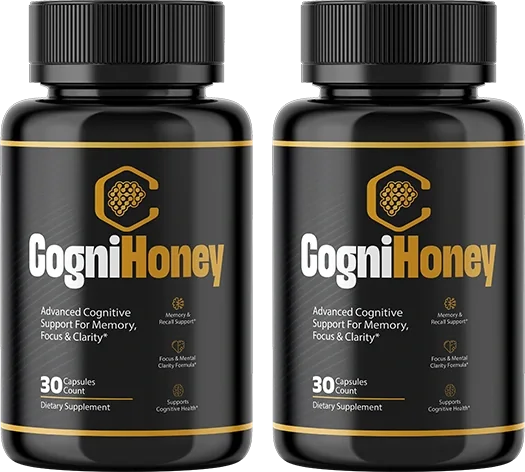
CogniHoney capsules: 30 on the bottle count2, 3 or 6 bottles · 60-day guarantee per seller materials
See packsStudied doses05
How do vitamin amounts differ from herb amounts?
Vitamins have official daily numbers. Herbs mostly do not.
Adults need 1.3 mg of B6 a day between ages 19 and 50, with an upper limit of 100 mg in the U.S. and 12 mg set by EFSA in 2023 (NIH ODS, Vitamin B6). The adult B12 recommendation is 2.4 mcg a day, and no upper limit exists because of low toxicity (NIH ODS, Vitamin B12). Choline has an adequate intake of 550 mg for men and 425 mg for women, and an upper level of 3,500 mg from all sources (NIH ODS, Choline).
Herbs have no such table. The numbers come from trials, and trials chose their own amounts. That is why a vitamin line with a printed amount is easy to judge, while a bacopa or ginkgo line without one is not.
Studied doses06
What do studied doses not tell you?
- Whether the capsules in your hand contain what the label says, since what is on the label may not be what is in the product (NCCIH, Using Dietary Supplements Wisely).
- Whether the same amount is safe with your medicines, your liver or your heart.
- Whether the trial population resembles you. GEM enrolled adults aged 75 or older.
- Whether combining eleven ingredients changes the picture. No trial tested the combination.
Studied amounts also come with outcomes that were small, such as faster reaction times, not a change you would notice in daily life. Read them as the edge of what is known, not a target.
FAQ07
CogniHoney questions people ask
What dose of bacopa was studied?
Trials used 300 to 450 mg of extract a day for 12 weeks or more.
What dose of ginkgo was studied?
The GEM trial used 120 mg of extract twice a day for a median of 6.1 years.
What is the AREDS2 dose of lutein?
10 mg lutein plus 2 mg zeaxanthin a day, studied for eye disease.
What is the daily upper limit for vitamin B6?
The U.S. upper limit is 100 mg a day. EFSA set 12 mg a day in 2023. The CogniHoney amount is not printed.
How much choline do adults need?
The adequate intake is 550 mg a day for men and 425 mg for women, from all sources, with an upper level of 3,500 mg.
Do studied doses mean CogniHoney contains that much?
No. No milligram amount is printed in any material given to this site, so a studied dose is a yardstick only.
Why do the studied doses use extracts?
Researchers standardize an extract so each capsule carries a known amount of marker compounds. A plain powder varies from batch to batch.
Who wrote this08
Written and reviewed by
Pages built from the label, the seller checkout and linked NIH, FDA, FTC, CDC and peer-reviewed sources.
Last updated . Read our editorial standards and how we check reviews. This website is the information site for a U.S. authorized retailer of CogniHoney. It is not the manufacturer. We earn money when you buy through our order links.
Keep reading
More about CogniHoney
USA Authorized CogniHoney Retailer
Ready to look at CogniHoney?
Read the bottle you receive, check your medicines with a pharmacist (blood thinners, thyroid, statins and diabetes medicines matter here), then pick a pack. The guarantee is 60 days per the seller's materials; confirm the live wording at checkout.
- Checkout on the sales site
- 60-day guarantee (confirm live)
- Ships from the U.S.