Do they work?
Do Memory Supplements Work? What NIA and the Trials Say
NIA says no vitamin or supplement is recommended for preventing Alzheimer's or cognitive decline, and many studies were too small or too brief. Ginkgo did not reduce dementia in a large trial, B vitamins probably do little in mild cognitive impairment, and bacopa shows modest effects in small trials. No trial tested CogniHoney.
Written by the CogniHoney label deskUpdated
Do they work?01
What does NIA say?
No vitamin or supplement has been proven to prevent Alzheimer's in people.
NIA says that at this time none is recommended for preventing Alzheimer's or cognitive decline, and that evidence is weak because many studies were too small or too brief (NIA, Diet and Prevention of Alzheimer's). That is the agency whose job is aging research, reviewed in 2023 and again in 2024 (NIA, Cognitive Health and Older Adults), speaking about the whole shelf, not one bottle.
The statement is narrow and worth reading closely. It does not say every ingredient has been tested and failed. It says the evidence does not support a recommendation. For most of the lines in a typical memory capsule, there is simply no good trial at all, which is a different problem from a negative one.
Do they work?02
What did the trials find?
Mostly little or nothing for prevention, with a few modest signals in small studies.
| Ingredient | Amount in the source | What the source found | Catch |
|---|---|---|---|
| Bacopa monnieri extract | 300 to 450 mg a day for 12 weeks or more | Better free recall on 9 of 17 memory tests (6 small trials); faster attention and reaction time (9 trials) (Pase 2012, bacopa review) (Kongkeaw 2014, bacopa meta-analysis) | Small, short, different extracts; none tested this capsule |
| Ginkgo biloba extract | 120 mg twice a day for a median 6.1 years (GEM trial) | No reduction in dementia in 3,069 adults aged 75 or older (DeKosky 2008, GEM trial) (Birks 2009, Cochrane ginkgo) | Cochrane: benefit inconsistent and unreliable |
| Lutein 10 mg + zeaxanthin 2 mg | Daily for about 5 years (AREDS2) | No significant effect on a composite cognitive score in 3,741 older adults (Chew 2015, AREDS2 cognition) | Tested for eye disease first |
| B vitamins (B6, B12, folic acid) | Combined, for 6 to 24 months | Probably little or no effect on memory in people with mild cognitive impairment (5 trials, 879 people) (McCleery 2018, Cochrane B vitamins) | Helps if you are truly deficient; trials in others show no memory effect |
| Vitamin B6 | RDA 1.3 to 1.7 mg; upper limit 100 mg (EFSA 12 mg) | Insufficient evidence on cognition (14-trial review; Cochrane found no benefit) (NIH ODS, Vitamin B6) (Malouf 2003, Cochrane vitamin B6) | Too much, long term, can damage nerves |
| Choline (all sources) | Adequate intake 550 mg men, 425 mg women; upper level 3,500 mg | Did not clearly improve cognition in healthy adults (2015 review via ODS) (NIH ODS, Choline) (Lee 2021, alpha-GPC and stroke) | Alpha-GPC dose in this product unknown |
| Alpha-GPC (cohort) | Prescribed use in Korean adults aged 50 or older | Higher 10-year stroke risk in users (adjusted HR 1.43), a dose-response pattern (Lee 2021, alpha-GPC and stroke) | Observational; not proof of cause |
| Green tea extract | Liver cases at roughly 140 mg to 1,800 mg a day | Liver injury is a well-established but uncommon risk (NIH LiverTox, Green Tea) (USP 2020, green tea extract review) | No cognition claim in NCCIH |
| Bilberry | Fruit extract up to 160 mg a day for up to 6 months | Not clearly shown to help any condition (NCCIH, Bilberry) | Leaf powder is not the fruit extract |
| Cinnamon | No amount in this product known | Diabetes evidence unclear; coumarin is a liver concern with cassia (NCCIH, Cinnamon) | Species not stated |
Read the table by column. The amounts are what researchers used or what authorities recommend. They are not the amounts in CogniHoney, because none is printed in any material we hold. The last column is the catch, and it is usually the most important one: a trial of one extract in one group of people says little about a mixed capsule in a different group.
Do they work?03
How do the CogniHoney ingredients line up against that evidence?
Ginkgo and bacopa have the most research, and neither result supports a prevention claim.
Ginkgo was tested in the GEM trial of 3,069 adults aged 75 or older. At 120 mg of extract twice a day, dementia was not reduced over a median of 6.1 years (DeKosky 2008, GEM trial). A Cochrane review of 36 mostly small, short trials called the evidence of benefit inconsistent and unreliable (Birks 2009, Cochrane ginkgo).
Bacopa did better in small studies. A review of six 12-week trials found better scores on 9 of 17 free-recall tests (Pase 2012, bacopa review). The authors of a nine-trial meta-analysis said only a larger, well-designed study could confirm the signal (Kongkeaw 2014, bacopa meta-analysis).
B vitamins, in people with mild cognitive impairment, probably have little or no effect on memory (McCleery 2018, Cochrane B vitamins). Lutein and zeaxanthin at the AREDS2 amounts had no significant effect on a cognitive score. For pink salt, cinnamon, bilberry leaf, green tea extract and alpha-GPC, we found no source that supports a memory claim.
Do they work?04
How big is the gap between a claim and a trial?
Wide enough that the label words and the evidence describe different things.
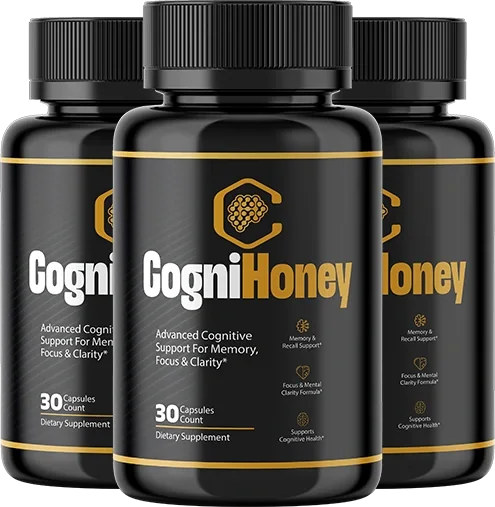
The bottle render carries "Memory & Recall Support*" and "Supports Cognitive Health*". The asterisk points to the standard FDA statement: it has not evaluated these claims, and the product is not intended to diagnose, treat, cure or prevent any disease. FDA lets a supplement describe a nutrient's role in normal body structure or function if the maker has substantiation (FDA, Structure/Function Claims). That is a lower bar than a trial of the finished product.
| Step | What it would take | Status for CogniHoney |
|---|---|---|
| Product trial | Randomized, controlled study of the actual capsule | None found |
| Matching dose | Amounts in the capsule equal the studied amounts | No amount is printed in our materials |
| Right form | The same extract or compound as in the trial | Names only; forms not stated |
| Long enough | Follow-up measured in months or years | Not applicable without a trial |
| Replication | Independent teams find the same | Not applicable without a trial |
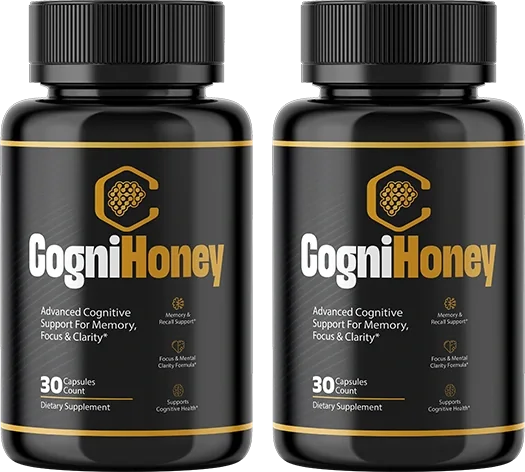
CogniHoney capsules: 30 on the bottle count2, 3 or 6 bottles · 60-day guarantee per seller materials
See packsDo they work?05
What would good evidence look like?
- A randomized, controlled trial of the actual product, not only its ingredients.
- A dose and a form that match the label.
- A long enough follow-up and a clear outcome.
- Independent replication.
- Results reported whether or not they were favorable.
The FTC uses a similar test. Its guidance says benefit claims generally need randomized, controlled human clinical testing, that observational studies show association and not cause, and that testimonials are never enough on their own (FTC, Health Products Compliance Guidance).
That last point matters when you read reviews. A glowing story is a story, not a measurement. For that reason this site publishes no ratings, counts or quotes, and none is verified.
Do they work?06
Why might a capsule feel like it works?
Because a feeling is not a measurement, and many things change at the same time.
Someone who starts a capsule often starts paying more attention, sleeping better or eating differently around the same time. Memory also varies from day to day with stress and tiredness. Trials use a placebo group for exactly this reason. Without a comparison group, nobody can say which change came from the capsule.
A doctor can check causes a capsule cannot reach.
Do they work?07
What should you do instead?
Ask about treatable causes and keep medicines reviewed.
- MedicinesSome medicines, or combinations of them, can cause forgetfulness or confusion. Tell your clinician about every prescription, over-the-counter medicine and supplement. (Mayo Clinic, Memory Loss) (NIA, Cognitive Health and Older Adults)
- Low vitamin B12Mayo Clinic says not enough B12, common in older adults, can affect memory. A blood test shows it; ODS lists who is at risk. (Mayo Clinic, Memory Loss) (NIH ODS, Vitamin B12)
- Mood, stress and sleepStress, anxiety, depression and untreated sleep apnea can all affect memory and attention. (Mayo Clinic, Memory Loss)
- Thyroid, alcohol and head injuryAn underactive thyroid, heavy alcohol use and head injuries, even without loss of consciousness, can affect memory. (Mayo Clinic, Memory Loss)
- DeliriumNIA describes delirium as a sudden state of confusion, often in a hospital stay, and says to seek treatment. (NIA, Cognitive Health and Older Adults)
- Early dementiaMemory loss that disrupts daily life is often an early sign; the Alzheimer's Association says do not ignore it and to see a doctor. (Alzheimer's Association, 10 Early Signs) (Mayo Clinic, Memory Loss)
The habits guide turns this list into questions to ask. If you still want to try a supplement afterward, read the bottle, confirm the ingredient list that came from the sibling pack, and ask a pharmacist about your medicines. Claims versus evidence goes line by line through the bottle's wording.
FAQ08
CogniHoney questions people ask
Do brain supplements really work?
NIA recommends none for preventing Alzheimer's or cognitive decline, and says the evidence is weak. Some small trials show modest effects.
Does ginkgo work for memory?
Not for preventing dementia in the GEM trial of 3,069 older adults. A Cochrane review called other results inconsistent.
Does bacopa improve memory in trials?
Six small 12-week trials scored better on some recall tests. Reviewers want a bigger, better-designed study before drawing a conclusion.
Do B vitamins help memory?
A Cochrane review of five trials in mild cognitive impairment found probably little or no effect on episodic memory.
Has CogniHoney been tested in a study?
No study has tested CogniHoney, so nobody can say what the capsules do.
Is a studied dose the same as a label dose?
No. Trial amounts belong to those trials. CogniHoney's materials print no milligram amount for any line.
What is the difference between a structure claim and a proven benefit?
A structure or function claim needs maker substantiation and an FDA disclaimer, not an FDA review of whether the product works.
What should I do before buying a memory supplement?
Ask a doctor about treatable causes and a pharmacist about interactions. Then read the bottle's label.
Who wrote this09
Written and reviewed by
Pages built from the label, the seller checkout and linked NIH, FDA, FTC, CDC and peer-reviewed sources.
Last updated . Read our editorial standards and how we check reviews. This website is the information site for a U.S. authorized retailer of CogniHoney. It is not the manufacturer. We earn money when you buy through our order links.
Keep reading
More about CogniHoney
USA Authorized CogniHoney Retailer
Ready to look at CogniHoney?
Read the bottle you receive, check your medicines with a pharmacist (blood thinners, thyroid, statins and diabetes medicines matter here), then pick a pack. The guarantee is 60 days per the seller's materials; confirm the live wording at checkout.
- Checkout on the sales site
- 60-day guarantee (confirm live)
- Ships from the U.S.