Editorial standards
Editorial Standards: How the CogniHoney Pages Are Written and Checked
We link every study and public source we rely on, never invent milligrams, never publish unverified reviews, and say plainly when something is unknown. We disclose that we may earn a commission. We correct errors and move the date. We do not claim the product treats or prevents any condition.
Written by the CogniHoney label deskUpdated
Editorial standards01
What are the rules?
- Every health statement links a public source or is marked as unknown.
- No milligram amount is shown unless a label image prints it. None is.
- No review, rating or testimonial appears unless it is order-matched and consented.
- No claims that the product treats, prevents, lowers or boosts anything.
- No seal is shown as proof without a named certifier.
- Prices are slots until the checkout confirms them.
Each rule exists because the opposite habit is common in the supplement trade. Invented amounts make a formula look dosed. Borrowed reviews make it look popular. Unnamed seals make it look audited. We take the slower route and print the blank.
Editorial standards02
Which sources count, and how much?
Government health pages and peer-reviewed trials first, then reviews of trials, then everything else.
We cite NIH, FDA, FTC, CDC and PubMed records, and we cap links at three a section and ten a page so the pages stay readable. A source is cited only for what it says. If a study tested bacopa at 300 to 450 mg for 12 weeks, we do not write that bacopa works; we write what was tested and found.
| Source type | How we use it | Limit |
|---|---|---|
| Government health pages (NIH, FDA, FTC, CDC) | Safety, regulation and recommended amounts | Often general, not about this product |
| Randomized trials | What happened at a stated dose in a stated group | Rarely the same extract, amount or people |
| Systematic reviews and meta-analyses | The balance of several trials | Only as good as the trials inside |
| Observational studies | A signal to ask about, such as the alpha-GPC stroke link | Association, not proof of cause |
| Animal and cell studies | Background on possible routes | Never evidence for people |
| Seller materials and the bottle render | What the product says about itself | A claim, not a finding |
The FTC treats observational findings as showing association, not cause, and says testimonials never substantiate a health claim (FTC, Health Products Compliance Guidance). We apply the same ladder to ourselves.
Editorial standards03
How does a source become a sentence?
By keeping the verb, the dose, the group and the result attached to each other.
Most overclaiming happens when one of those four drops away. A trial that found faster reaction times in volunteers on a standardized extract becomes "bacopa sharpens the mind". We keep the four together, and the table shows the difference.
| Weak phrasing | Our phrasing | What it keeps |
|---|---|---|
| Ginkgo protects memory | In GEM, 120 mg of extract twice a day did not change dementia rates in adults aged 75 or older | Dose, group, result |
| Bacopa works in 12 weeks | Small 12-week trials found better scores on some word-recall tests | Duration, size, scope |
| Choline is dangerous | One large cohort linked alpha-GPC to a higher stroke risk; it shows association only | Study type, limit |
| B12 boosts the brain | B12 is a needed nutrient; trials show it does not improve cognition in people who are not deficient | Condition for the finding |
Phrases on the left are easy to write and easy to sell. The ones on the right are longer, and they are the ones you can check.
Editorial standards04
Who writes and who checks?
A label desk writes; a medical reviewer slot is held open for a clinician who agrees to be named.
Writers work from the same fact sheet: the bottle render, the seller brief and a fixed set of 36 public sources. Each page is checked against that sheet for banned claims, invented numbers and missing source links before it goes up. Because the product facts are few and fixed, two pages never disagree about the capsule count, the dose wording or the ingredient list.
Editorial standards05
Affiliate disclosure
We may earn a commission if you buy through links on this site, at no extra cost to you.
The FTC expects clear disclosure of such connections (FTC, Health Products Compliance Guidance). Order buttons use rel="sponsored nofollow". Our commission does not change what we say about evidence.
In practice, the commission has one visible effect: the site includes order buttons. It does not buy a better word. The pages say that no study tested the product, that ginkgo may raise bleeding risk and that green tea extract is a recognized cause of rare liver injury. We would write those lines whether or not an order followed.
Editorial standards06
What words do we avoid?
Any word that promises a result the evidence does not show.
We do not write that CogniHoney treats or prevents dementia, Alzheimer's disease, ADHD or any other condition. We do not write that it improves, restores or sharpens memory. We do not call it risk-free, free of side effects or "clinically proven", and we do not say that a doctor endorses it. When a phrase from the bottle or from advertising matters to a reader, we put it in quotation marks and say whose words they are.
One boundary matters most. The FDA describes a structure/function claim as a statement about a nutrient's role in normal body function, with the maker's own substantiation and an FDA disclaimer; it may not claim to treat or prevent disease (FDA, Structure/Function Claims). Everything on the bottle front sits on that side of the line, and we read it that way.
Editorial standards07
How do we handle reviews?
We publish none until we can verify them.
The seller brief supplied sample ratings, counts, percentages and named reviewers. We treat them as sample copy and do not print them. The FTC's rule bans fake or false reviews and testimonials, insider reviews that do not disclose the connection to the business, and review suppression through groundless threats (FTC, Final Rule Banning Fake Reviews). A review enters this site only if it is matched to a real order, the writer consents, and we can show how it was checked.
Editorial standards08
How do we correct errors?
Write to [email protected]. We fix confirmed errors and update the date shown on the page.
A fix is a change to the page and a new date, with no silent edits. If a correction changes a safety statement, we move the date the same day. Corrections do not need a reason beyond a source: tell us what is wrong and send the link.
Editorial standards09
What do we say when we do not know?
We say so, and we show a slot.
Examples: milligrams, prices, the live guarantee wording, the reviewer, reviews, the manufacturer.
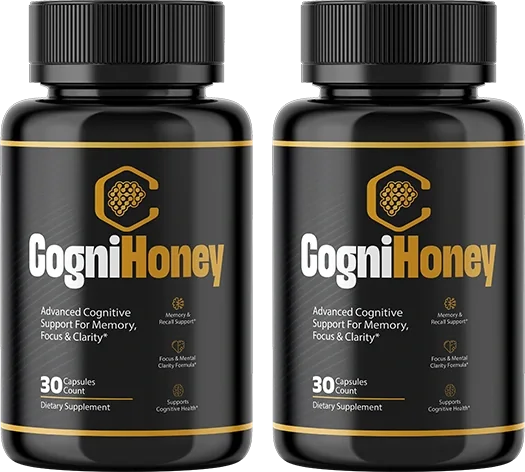
The list is not decoration. Each item is a fact a buyer would want and our materials do not supply. The ingredient list and the dose come from a sibling pack, so we word them as the list given to this site for the sibling pack and ask you to confirm both on your bottle. The capsule count has the same rule: the render prints 30, and a 60-capsule figure has not been confirmed.
Editorial standards10
How does medical review work?
A named, consenting clinician reviews pages and signs the date. Until one is confirmed, the reviewer line shows a slot.
We never write "doctor reviewed" without a real reviewer, and we never print a physician's name from a seller brief. The author line reads "Written by the CogniHoney label desk" because that is what it is. See the about page for the full picture.
FAQ11
CogniHoney questions people ask
Do you take payment for reviews?
No. We earn a commission on orders; we do not sell positive coverage.
Do you test the product?
No. We read the bottle render, the seller brief and public sources.
How often are pages updated?
When we confirm an error, find a new source or receive a corrected fact. Each page shows its last-updated date.
Why are some words in quotation marks?
They are label or advertising words. Quotation marks show they are the seller's words, not our findings.
Do you accept corrections from readers?
Yes. Write to the website inbox with the page and a source link, and we will check it.
Why do you not name a medical reviewer?
No reviewer has been confirmed and consented. We do not use a name from a seller brief.
Why do the pages link so few sources?
We cap links per section so the pages stay readable. Each linked source supports only what the sentence says.
Who wrote this12
Written and reviewed by
Pages built from the label, the seller checkout and linked NIH, FDA, FTC, CDC and peer-reviewed sources.
Last updated . Read our editorial standards and how we check reviews. This website is the information site for a U.S. authorized retailer of CogniHoney. It is not the manufacturer. We earn money when you buy through our order links.
Keep reading
More about CogniHoney
USA Authorized CogniHoney Retailer
Ready to look at CogniHoney?
Read the bottle you receive, check your medicines with a pharmacist (blood thinners, thyroid, statins and diabetes medicines matter here), then pick a pack. The guarantee is 60 days per the seller's materials; confirm the live wording at checkout.
- Checkout on the sales site
- 60-day guarantee (confirm live)
- Ships from the U.S.