Choline and stroke
Choline, Heart and Stroke: What the Alpha-GPC Signal Does and Does Not Show
In a Korean insurance cohort of adults aged 50 or older, alpha-GPC users had a higher 10-year stroke risk (adjusted hazard ratio 1.43), in a dose-response pattern. It is observational, so it shows association, not proof of cause. A mouse study linked alpha-GPC to atherosclerosis. If you have stroke risk factors, ask a doctor first.
Written by the CogniHoney label deskUpdated
Choline and stroke01
Why is choline on a memory supplement list?
Choline is a nutrient the body uses, and alpha-GPC is one form of it.
The list given to this site for the sibling pack names "AGP choline". We read that as alpha-glycerylphosphorylcholine, or alpha-GPC, but the name must be confirmed on the bottle. No amount is printed in any material we hold, so we cannot tell whether a capsule supplies a little or a lot.
NIH ODS says little research supports choline slowing dementia, and that a 2015 review found choline supplements did not clearly improve cognition in healthy adults (NIH ODS, Choline). So the case for including it rests on theory more than on trials. The question for a buyer is whether the possible downside, described below, is worth carrying for an unproven upside.
Choline and stroke02
What did the Korean cohort find?
A higher 10-year risk of stroke in alpha-GPC users, in a dose-response pattern.
The study used national insurance data on adults aged 50 or older without prior stroke or Alzheimer's. After matching, users had an adjusted hazard ratio of 1.43 for total stroke (95% confidence interval 1.41 to 1.46), and the risk rose with the amount prescribed (Lee 2021, alpha-GPC and stroke). The confidence interval is narrow because the cohort was very large.
The authors also said users were older and were prescribed the product, and they called for more study. A hazard ratio of 1.43 means a 43 percent higher rate of stroke in that dataset after adjustment; it does not say how many strokes any one person will have.
Choline and stroke03
What does an observational study not prove?
It cannot prove cause. It shows that two things travel together.
The FTC states the rule plainly: observational studies show association, not cause (FTC, Health Products Compliance Guidance). People who are prescribed alpha-GPC may differ from those who are not in ways that matter for stroke, such as the condition they were treated for, and statistical adjustment cannot remove every such difference. The dose-response pattern strengthens the signal, but it does not turn it into proof.
| Question | Korean cohort | Mouse study |
|---|---|---|
| Who or what was studied | Adults aged 50 or older, without prior stroke or Alzheimer's | Mice prone to atherosclerosis; some human cells and samples |
| What was found | Higher 10-year stroke risk in alpha-GPC users (adjusted HR 1.43) | GPC promoted atherosclerosis via gut-bacteria TMAO and other routes |
| Design | Observational | Laboratory animal work |
| What it can show | A signal worth taking seriously | A possible mechanism |
| What it cannot show | That alpha-GPC caused the strokes | That the same thing happens in people |
Choline and stroke04
What about the mouse study?
In mice prone to atherosclerosis, GPC promoted it through gut-bacteria production of TMAO.
Some tests used human cells and samples, but the effect was shown in mice (Mouse study, GPC and atherosclerosis). The study does not show the same effect in people. Its value is that it offers a plausible route for the cohort signal: TMAO is a compound that gut bacteria make from choline-containing substances, and ODS says high choline intakes raise TMAO (NIH ODS, Choline). A mechanism in mice and an association in people point in the same direction without proving each other.
Choline and stroke05
What does ODS say about choline intake?
Adequate intake is 550 mg a day for men and 425 mg for women, with an upper level of 3,500 mg.
These figures cover choline from all sources, food included (NIH ODS, Choline). ODS links high intakes to fishy body odor, vomiting, sweating, low blood pressure and liver toxicity, and notes that a newer analysis found higher mortality with higher choline intake, possibly via TMAO, which was not directly measured. ODS does not discuss alpha-GPC by name, so these numbers cannot be turned into a verdict on a capsule.
Because the CogniHoney amount is not printed, there is no honest arithmetic to do here. Anyone who sees an mg figure for the product should check it against the bottle.
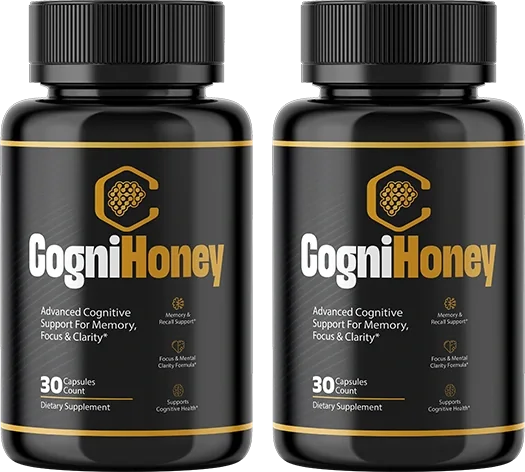
CogniHoney capsules: 30 on the bottle count2, 3 or 6 bottles · 60-day guarantee per seller materials
See packsCholine and stroke06
Does choline from food carry the same signal?
The cohort studied a prescribed alpha-GPC product, not choline from meals.
ODS counts choline from all sources toward its adequate intake and upper level (NIH ODS, Choline), but the stroke finding concerns one specific form taken as a product. Nothing we read says that the choline in ordinary food carries that association, and we make no such claim. The newer analysis ODS mentions, which linked higher choline intake to higher mortality, did not measure TMAO directly, so it is a hint and not a finding about food.
The practical point is narrow. If a doctor has told you to watch your heart risk, a capsule that adds a concentrated choline form on top of your diet is a new variable, and the doctor should know about it. Bring the bottle and ask whether your current choline intake from food and from other products already sits near the upper level, since no one can add it up without the label figure.
Choline and stroke07
Who should ask before taking a capsule with alpha-GPC?
Anyone with a stroke or TIA in the past, heart disease, or risk factors for stroke.
- You have had a stroke or a TIA.
- You have heart disease or have had a heart procedure.
- You take blood-pressure medicine, because choline at high intakes is linked to low blood pressure (NIH ODS, Choline).
- You take a blood thinner. Ginkgo, also in the list, may raise bleeding risk with anticoagulants (NCCIH, Ginkgo).
Take the bottle to a pharmacist and ask about each line. The AGP choline profile and medicine safety list the questions in one place.
Choline and stroke08
What should you do?
- Ask which form of choline is in your capsule, and how much.
- Ask a doctor if you have had a stroke, TIA or heart disease.
- Know the stroke signs and call 911 for them (CDC, Stroke Signs and Symptoms).
- Do not stop a prescribed medicine on your own.
One large study found a stroke association with alpha-GPC, one mouse study offered a mechanism, and neither tested CogniHoney. The signal is a reason to ask, not a verdict, and see the stroke signs for what to do in an emergency.
FAQ09
CogniHoney questions people ask
Does alpha-GPC cause stroke?
One cohort found an association; it does not prove cause. Users were older and prescribed the product.
Is choline safe?
ODS sets an upper level of 3,500 mg a day from all sources and links high intakes to side effects.
What does the hazard ratio 1.43 mean?
It means a 43 percent higher stroke rate among alpha-GPC users in that dataset, after adjustment. It is not an individual forecast.
What is TMAO?
A compound made by gut bacteria from choline-containing substances. ODS says high choline intakes raise it.
Does the mouse study apply to people?
It does not show the same effect in people. It suggests a mechanism that needs human study.
Does AGP in CogniHoney mean alpha-GPC?
We read it that way, but the list is from a sibling pack. Confirm the name on your bottle.
How much choline is in CogniHoney?
No amount is printed in any material given to this site, so we cannot say.
Should I avoid CogniHoney after a stroke?
Ask your doctor before starting it. This site cannot give personal advice.
Who wrote this10
Written and reviewed by
Pages built from the label, the seller checkout and linked NIH, FDA, FTC, CDC and peer-reviewed sources.
Last updated . Read our editorial standards and how we check reviews. This website is the information site for a U.S. authorized retailer of CogniHoney. It is not the manufacturer. We earn money when you buy through our order links.
Keep reading
More about CogniHoney
USA Authorized CogniHoney Retailer
Ready to look at CogniHoney?
Read the bottle you receive, check your medicines with a pharmacist (blood thinners, thyroid, statins and diabetes medicines matter here), then pick a pack. The guarantee is 60 days per the seller's materials; confirm the live wording at checkout.
- Checkout on the sales site
- 60-day guarantee (confirm live)
- Ships from the U.S.