Liver safety
Cassia Cinnamon and Green Tea Extract: Liver Safety Explained
LiverTox rates green tea extract a well-established cause of clinically apparent liver injury, usually 1 to 6 months after starting, and NCCIH says cassia cinnamon contains coumarin with liver interactions reported. Both are named in the CogniHoney list. Stop and call a clinician for abdominal pain, dark urine or yellow skin or eyes.
Written by the CogniHoney label deskUpdated
Liver safety01
Why does a memory supplement need a liver page?
Because two lines in the list given to this site each carry a liver caution in public sources.
The sibling-pack list names cinnamon extract and green tea extract (50%), with no amounts. We found no source that supports a memory claim for either. What the sources do cover is the liver, so that is where a careful buyer should look. The risk is uncommon, but the liver often gives few signals early, which is why the warning signs below are worth knowing.
Liver safety02
What about green tea extract?
Injury is uncommon but real, and it is mainly reported with extracts in capsule form.
NIH LiverTox rates green tea extract a well-established cause of clinically apparent liver injury, usually an acute hepatitis-like pattern 1 to 6 months after starting. Most people recover on stopping, but fatal liver failure has occurred, and there is no clear dose dependency (NIH LiverTox, Green Tea). NCCIH says there are no safety concerns for green tea as a beverage in adults, and that an immune-gene variant carried by 5 to 15 percent of Americans may raise susceptibility (NCCIH, Green Tea).
A USP review links case reports to EGCG intakes from 140 mg to about 1,000 mg a day with wide differences between people, and notes that bolus doses on an empty stomach raise EGCG absorption (USP 2020, green tea extract review). The CogniHoney percentage "(50%)" is printed without saying what it refers to, and no amount is printed, so none of these figures can be matched to a capsule.
Liver safety03
Does timing with food matter?
USP requires a caution: do not take it on an empty stomach, and take it with food.
The same caution says not to use it with a liver problem, and to stop and see a practitioner for abdominal pain, dark urine or jaundice (USP 2020, green tea extract review). The sibling-pack wording for CogniHoney says two capsules about 30 to 60 minutes before the largest meal, with a full glass of water. That may sit awkwardly with a with-food caution. We cannot resolve it from here, so confirm the directions on the bottle and ask a pharmacist how to read them together.
Liver safety04
What about cassia cinnamon?
Cassia contains coumarin.
NCCIH says interactions between coumarin and the liver have been reported, and that prolonged use of cassia could be an issue for sensitive people such as those with liver disease. Ceylon cinnamon has only trace coumarin, and product labels often do not name the species (NCCIH, Cinnamon). The CogniHoney list says only "cinnamon extract", so we do not know which is in the capsule.
A review derived a tolerable daily intake for coumarin of 0.1 mg per kg of body weight, and found that heavy cassia consumers can reach it (Abraham 2010, coumarin risk). As arithmetic only: for a person weighing 70 kg, that is 7 mg a day. How much coumarin a capsule adds depends on species and amount, neither of which we can see. If the species and the amount were both printed, the sum would take a minute; without them, the honest answer is that nobody outside the manufacturer can say.
Liver safety05
How do the two compare?
| Point | Green tea extract (50%) | Cinnamon extract |
|---|---|---|
| What the sources flag | Liver injury, mainly with extracts in capsule form | Coumarin in cassia and liver interactions |
| Reported pattern | Hepatitis-like, usually 1 to 6 months after starting | Concern with prolonged use in sensitive people |
| Who should be most careful | Anyone with a liver problem | People with liver disease |
| Detail we cannot see | What the 50% refers to; caffeine; the amount | Species (cassia or Ceylon); the amount |
| Medicine flag | Can lower levels of atorvastatin and nadolol | Ask a provider if you take any medicine |
| Memory evidence found | None | None |
We found no source on what happens when the two are taken together, so the comparison above is side by side, not combined. If you take other products that carry green tea extract or cinnamon, such as a weight or blood sugar capsule, add them to the picture, because intakes stack across bottles just as they do for B6.
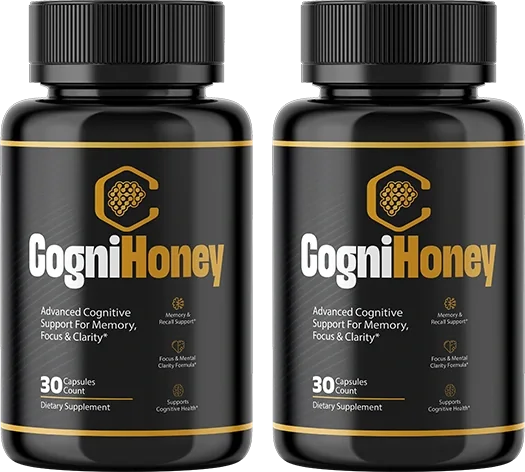
CogniHoney capsules: 30 on the bottle count2, 3 or 6 bottles · 60-day guarantee per seller materials
See packsLiver safety06
How can you tell if you are more at risk?
You cannot tell from the outside, which is why a liver history and a conversation matter.
NCCIH says an immune-gene variant carried by 5 to 15 percent of Americans may raise susceptibility to liver injury from green tea extract (NCCIH, Green Tea). Most carriers will never know. USP also notes wide differences in susceptibility between people at the same intake (USP 2020, green tea extract review). So a dose that one person takes without trouble is not a safe level for another, and a published range cannot be treated as a personal limit.
Ask your doctor whether your history of liver disease, heavy alcohol use or medicines that tax the liver makes either line a poor fit. Liver tests are the doctor's call, and asking about them is reasonable. This site cannot say whether you need them.
Liver safety07
What are the warning signs?
- Abdominal pain, especially in the upper right.
- Dark urine.
- Yellowing of the skin or eyes.
- Unusual tiredness with nausea, which can come with other causes too.
Stop and see a clinician the same day for the first three, as USP advises (USP 2020, green tea extract review). Tell the clinician about every supplement, bring the bottle, and report the reaction through FDA's MedWatch program (FDA MedWatch).
Do not stop a prescribed medicine, such as a statin, without asking the prescriber. NCCIH says green tea extract can lower blood levels of atorvastatin and nadolol, so ask rather than guess.
Liver safety08
What should you ask?
- Which cinnamon species is it, cassia or Ceylon?
- How much green tea extract is in a capsule, and does it contain caffeine?
- Should I have liver tests before and during use?
- Do I take atorvastatin or nadolol?
- Does my liver history make either line a poor idea?
Print this list or save it to your phone. The green tea extract profile and cinnamon extract profile give the research behind each question.
FAQ09
CogniHoney questions people ask
Can green tea extract harm the liver?
Rarely, but LiverTox rates it a well-established cause of liver injury, mainly with capsule extracts.
Is cassia cinnamon safe?
It contains coumarin; NCCIH says prolonged use could be an issue for sensitive people, such as those with liver disease.
What is the difference between cassia and Ceylon cinnamon?
Ceylon has only trace coumarin, per NCCIH. Cassia contains more, and labels often do not name the species.
When does green tea extract liver injury appear?
LiverTox says usually 1 to 6 months after starting, so symptoms can come well after the first dose.
Is drinking green tea a problem for the liver?
NCCIH says there are no safety concerns for green tea as a beverage in adults. The caution is about extracts.
How much coumarin is too much?
A derived tolerable intake is 0.1 mg per kg of body weight a day. For 70 kg, that is 7 mg.
Should I take CogniHoney on an empty stomach?
USP asks that green tea extract be taken with food. Confirm the bottle's directions and ask a pharmacist.
Does CogniHoney contain caffeine?
The list given to this site does not say. Check the bottle.
Who wrote this10
Written and reviewed by
Pages built from the label, the seller checkout and linked NIH, FDA, FTC, CDC and peer-reviewed sources.
Last updated . Read our editorial standards and how we check reviews. This website is the information site for a U.S. authorized retailer of CogniHoney. It is not the manufacturer. We earn money when you buy through our order links.
Keep reading
More about CogniHoney
USA Authorized CogniHoney Retailer
Ready to look at CogniHoney?
Read the bottle you receive, check your medicines with a pharmacist (blood thinners, thyroid, statins and diabetes medicines matter here), then pick a pack. The guarantee is 60 days per the seller's materials; confirm the live wording at checkout.
- Checkout on the sales site
- 60-day guarantee (confirm live)
- Ships from the U.S.